Bali Behaviour Guidelines
To do or not to do in Bali
Etiquette is the practice of socially and culturally acceptable behavior.
Following Balinese etiquette shows respect.
Bali is Very Tolerant – Too Tolerant?
The Balinese are incredibly tolerant, welcoming, and appreciative of any effort visitors make to respect the customs they deeply value. They are immensely proud of their customs and traditions and adhere closely to their societal and family codes of conduct.
Bali attracts visitors from all over the world, some of whom mistakenly view it as little more than a hedonistic party destination. Many feel emboldened by the locals’ tolerance, leading them to believe they can behave as they please.
It’s understandable that vacations come with a desire to unwind, but it would be ideal if visitors respected certain boundaries. Unfortunately, the mix of holiday vibes, tropical sun, testosterone, alcohol, and sometimes drugs creates a volatile situation that the Balinese must contend with daily.
Recently, disturbing viral posts have shown tourists “misbehaving in Bali,” prompting the governor of Bali to respond strongly and push the administration and law enforcement toward stricter action. These viral posts and reels have depicted extensive nudity by “influencers,” disrespectful behavior in temples and other sacred sites, frequent traffic violations such as tourists not wearing helmets, driving topless, aggressive confrontations with police during traffic stops, drunk driving, and other forms of “wild behavior.” While these posts don’t represent the majority of visitors, they have increased visibility on social media.
In response, the Balinese administration has issued an official guide of Do’s and Don’ts for international visitors AND foreign residents, encouraging them to act responsibly. These guidelines were implemented to address past incidents of disrespect and form part of a larger initiative to preserve Bali’s cultural integrity and maintain a high standard of tourism quality.
Official Tourist Guidelines for Bali. The Dos and Don’ts when visiting the Island of Gods distributed by the Balinese Government
Dos
- Respect the sanctity of temples, pratimas (sacred statues), and religious symbols
- Wholeheartedly respect the customs, traditions, arts, culture, and local wisdom of the Balinese people during ongoing ceremonial processions and rituals
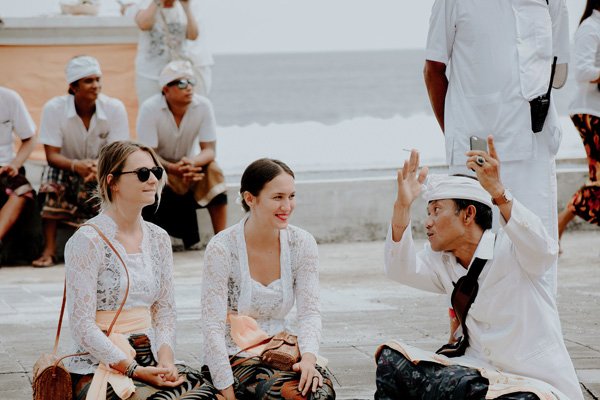
- Dress modestly, appropriately, and respectfully when visiting sacred areas, tourist attractions, public places, and engaging in activities in Bali
- Behave politely in sacred areas, tourist areas, restaurants, shopping areas, roads, and other public places
- Be accompanied by licensed tour guides (who understand the natural conditions, customs, traditions, and local wisdom of the Balinese people) when visiting tourist attractions
- Exchange foreign currency at authorized money changers (both banks and non-banks) that are officially licensed and display the authorization number and QR code logo from Bank Indonesia;
- Make payments using the Indonesian Standard QR Code (QRIS);
- Conduct transactions using the Indonesian rupiah;
- Comply with the applicable traffic laws in Indonesia, including possessing a valid international or national driving license, obey traffic rules, dress modestly, wear a helmet, follow traffic signs, not exceed passenger capacity, and no driving under the influence of alcohol or illegal drugs
- Use four-wheeled transportation that is roadworthy and officially registered or two-wheeled transportation that is operated by a legal business entity or association for two-wheeler rentals
- Stay in accommodations that possess the required permits according to applicable regulations
- Adhere to all specific provisions/rules that apply to each tourist attraction and tourist activity.
Don’ts
- Trespass sacred territories: Steer clear of utamaning mandala and madyaning mandala, holy and sanctified spots like puras and pelinggihs — unless you’re there for a Balinese traditional ceremony, during which you must wear the appropriate attire, and not during menstruation
- Touch sacred trees
- Engage in behavior that defiles sacred places, temples, idols, and religious symbols, such as climbing sacred structures and taking indecent or nude photos
- Litter and pollute lakes, springs, rivers, seas, and public areas
- Use single-use plastics like plastic bags, polystyrene (styrofoam), and plastic straws
- Utter offensive words, behave disrespectfully, cause disturbances, and act aggressively towards government authorities, local communities, and fellow tourists, both directly and indirectly through social media, including spreading hate speech and hoaxes
- Engage in work or business activities without proper documentation issued by the relevant authorities
- Get involved in illegal activities, such as trading illegal goods, including endangered flora and fauna, cultural artifacts, and sacred objects, as well as illegal drugs.
- Rent Loud Bikes
- Drive Recklessly, without Helmet, without T-Short. without International Driving License